Why Turkish rugs are the finest in the world
Turkey's weaving tradition stretches back more than five centuries, and its rugs have long been considered among the highest-quality and longest-lasting made anywhere. That reputation rests on two things: the hand of the artisan, and the knot they use. We source our pieces from established artisan workshops in western Turkey, where this discipline is still practised at its highest level.
The Turkish Double-Knot
This single technique is the reason Turkish rugs are counted among the strongest and longest-lasting rugs in the world — and it is the difference between a rug that wears out and one that is handed down.
From knot to heirloom
- 1
Two anchor points
The Gördes knot wraps each tuft of wool around two warp threads instead of one, locking it from both sides.
- 2
A denser foundation
Twice-anchored knots sit tighter together, so more knots fill every square inch — a heavier, more tightly bound pile.
- 3
Strength and resilience
That density means the pile can't loosen, shed or flatten. It springs back under footsteps and furniture where looser weaves crush and thin.
- 4
Lasting beauty
A stable foundation holds the pattern crisp and the natural dyes locked in, so the rug resists fading and distortion for decades.
- 5
An heirloom for generations
Nothing wears out. A double-knotted Turkish rug is still beautiful a century on — which is exactly why these rugs are passed down, not replaced.
“A single knot makes a rug.
A double knot makes an heirloom.”
What it is
Also called the Ghiordes knot, the Turkish double-knot is a symmetrical knot: the wool is looped around two warp threads and drawn back through the centre, so both ends emerge together, locked between the warps. Where Persian (Senneh) weaving wraps the yarn around a single thread, the Turkish method secures every strand twice.
Why it's unique to Turkish weaving
This symmetrical double-knot is the defining technique of the Turkish tradition, passed hand to hand through generations of artisans. It is slower and more demanding to tie — and it is what gives a Turkish rug its strength and its character.
Demanding to make
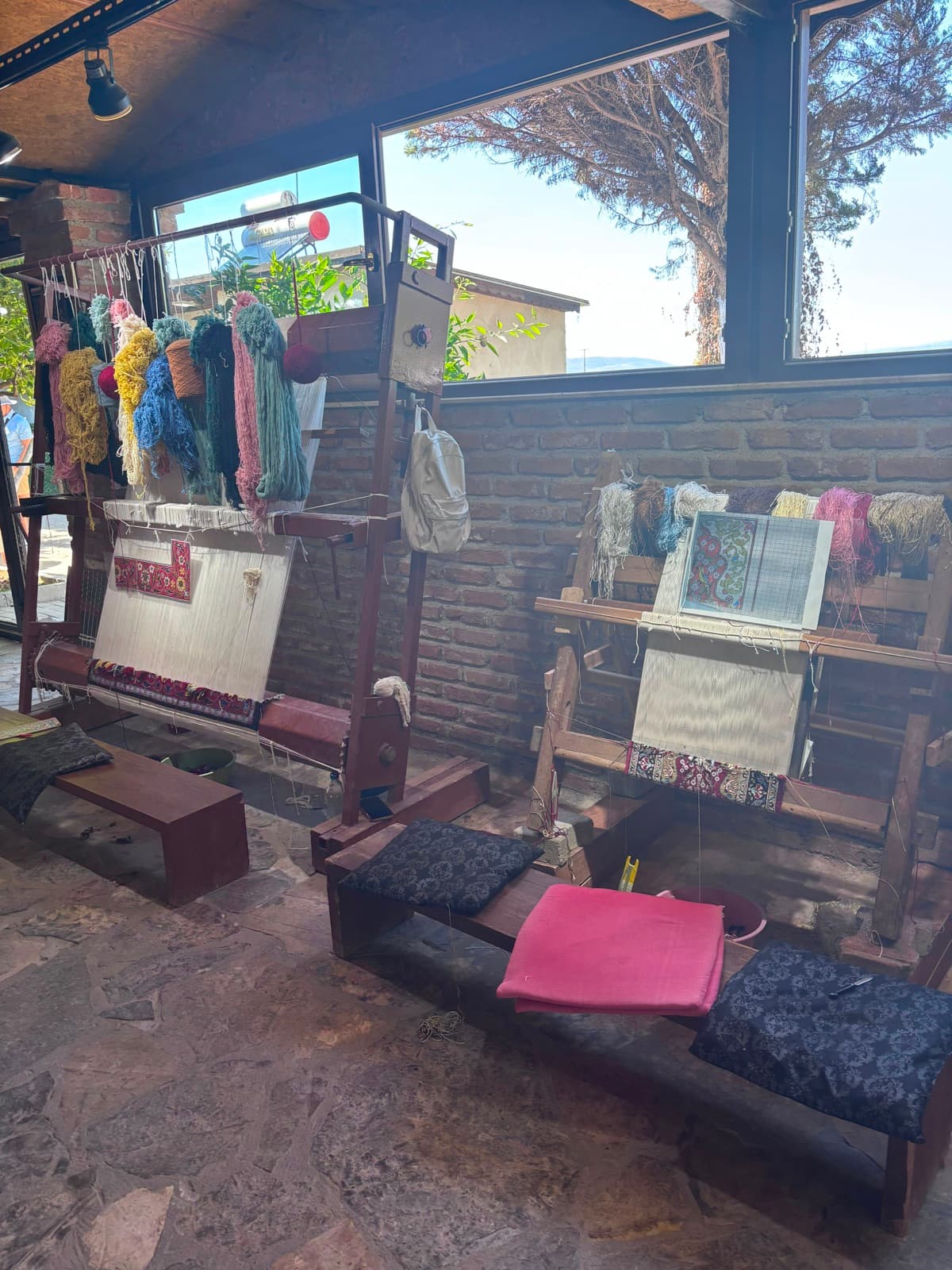
Tying each strand twice is slower and more exacting than any single-knot method — a discipline measured in months at the loom, and in the hands of artisans who have practised it for generations.
Worth the wait
What you gain is permanence. A double-knotted Turkish rug isn't bought to be replaced; here, durability isn't a feature — it's the entire point.
Density
Twice-anchored tufts pack the pile tighter than any single-knot weave.
Resilience
Springs back from footfall and furniture; resists crushing and shedding.
Longevity
Built to be walked on for generations without wearing thin.
Colour & pattern hold
A tighter foundation keeps motifs sharp and natural dyes true for decades.
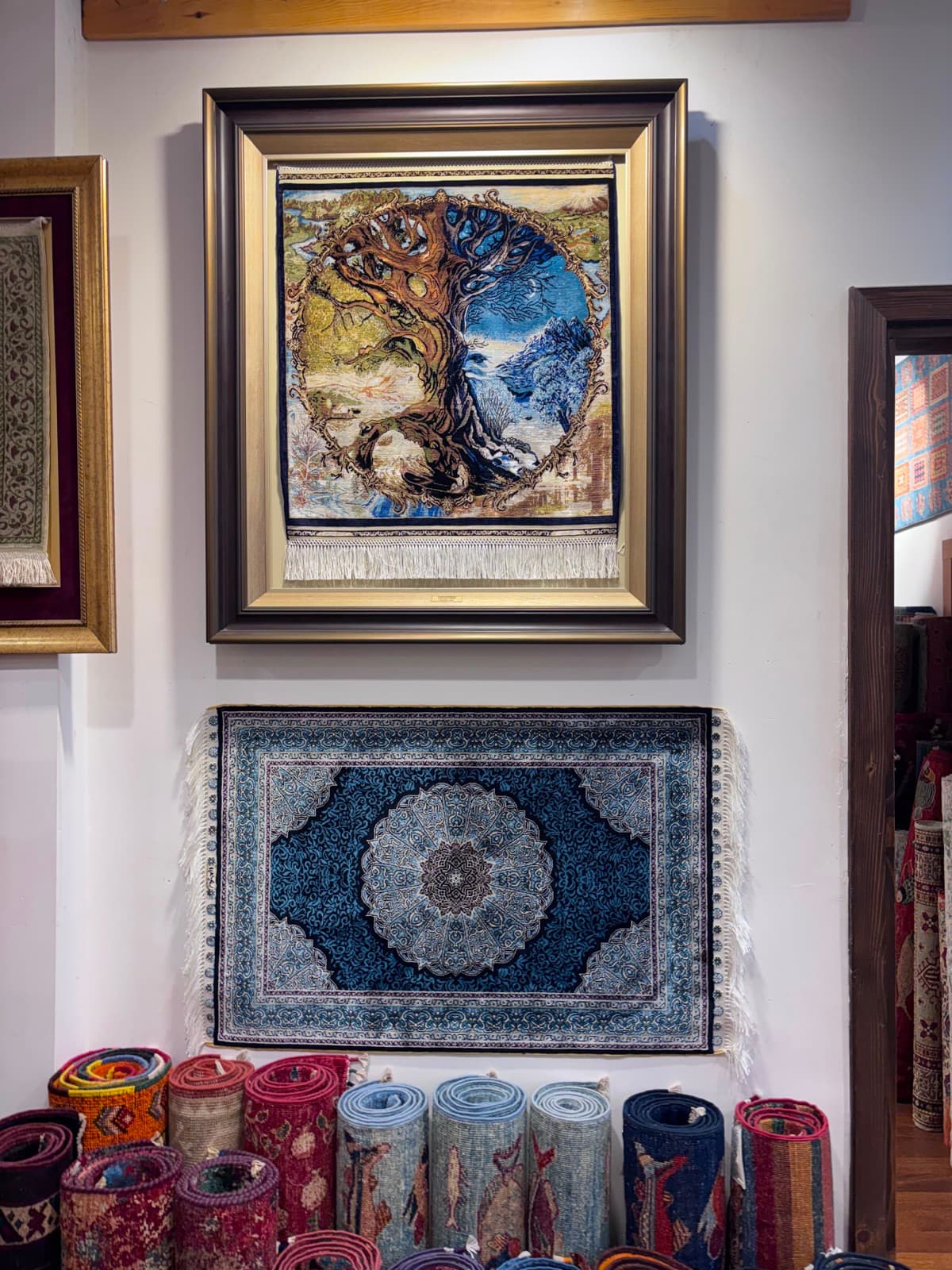
At the very top of the craft, artisans work at densities exceeding 900 knots per square inch, threading silk pile yarn onto warps as fine as human hair. The result is a surface so dense it reads like velvet — and lasts for generations without degradation.
The madder root.
The indigo bath.
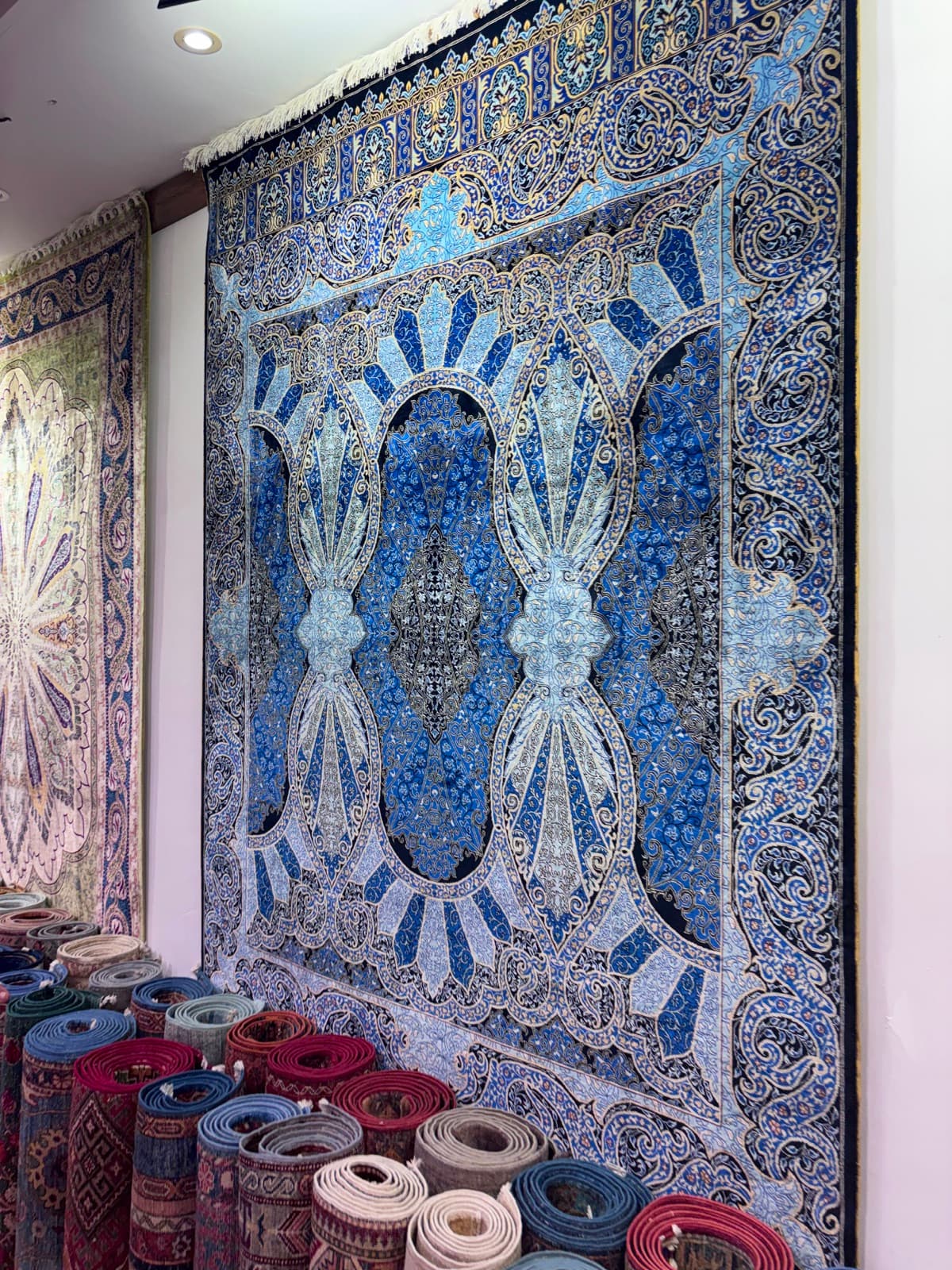
Every colour in a Mille Knots rug is drawn from nature — madder root for red, indigo for blue, pomegranate and walnut for earth tones — never synthetic dye. Natural colour does more than glow with a depth chemicals can't imitate. It ages gracefully rather than fading harshly, so the rug keeps its beauty for decades. It carries none of the harsh chemicals found in mass-produced rugs — better for your home and the people in it. And it lets the rug be cared for simply: a gentle clean with mild natural soap and water is all it needs.
Wool, silk, and patience.
The shepherd's wool
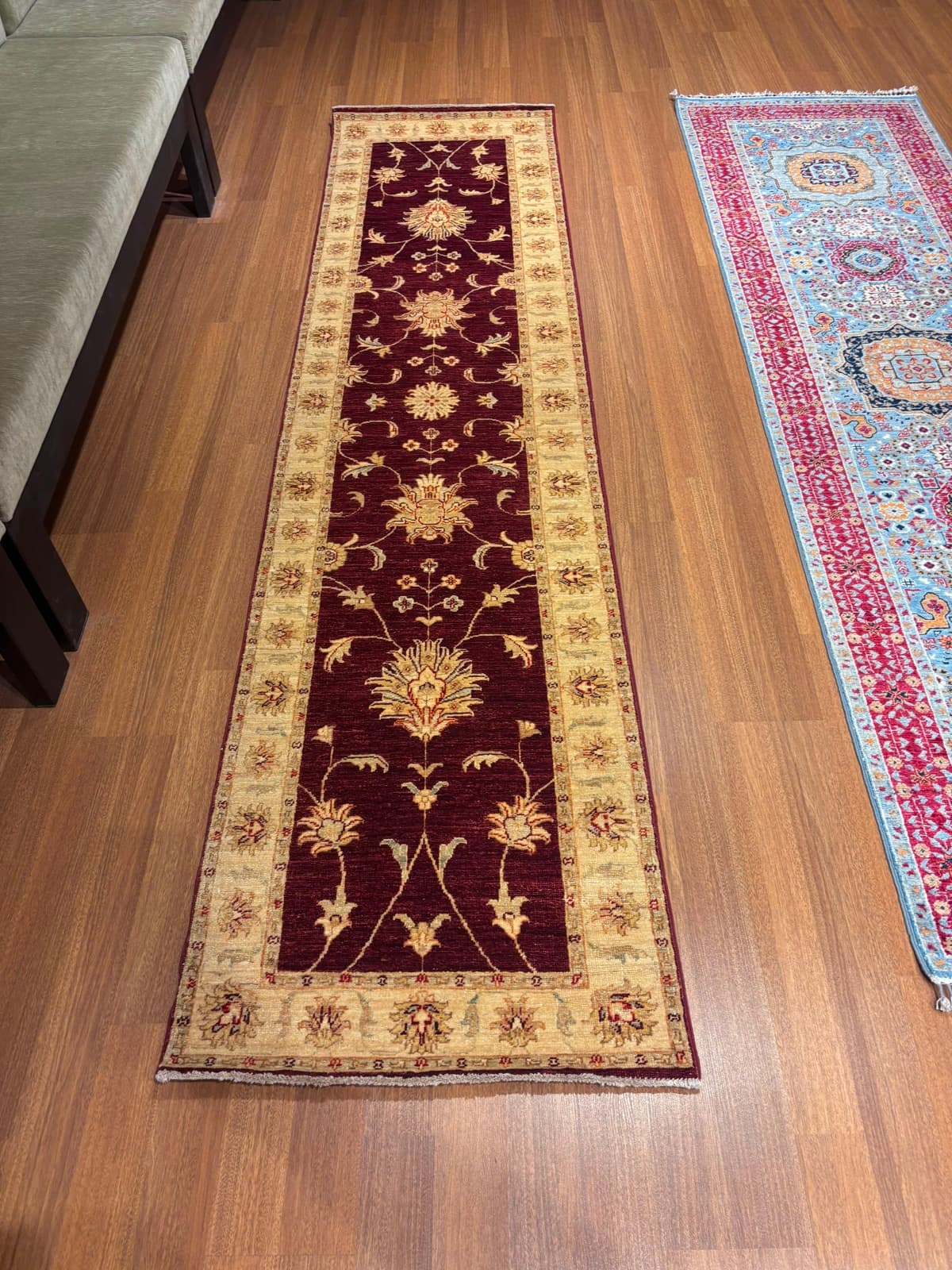
The finest pile rugs use hand-spun wool from highland flocks. The lanolin content, the fibre length, and the tightness of the spin all affect how the dye takes and how the pile wears — each source yields wool with its own character.
Cocoon silk
Silk-pile rugs sit at the pinnacle of the craft. The yarn, spun from cultivated cocoon silk to a fineness that allows hundreds of knots per square inch, gives a surface with a lustre that shifts with the angle of light.
Warp & weft
The foundation of a rug — its warp (vertical) and weft (horizontal) threads — determines its structure and longevity. Cotton foundations offer stability; wool foundations give warmth and flexibility. Silk on silk is the rarest, the most precious, and the most demanding.
We know them
by name.
In most of the rug trade, the weaver is anonymous — a cost input in a supply chain. We work differently. We know the workshops we source from, the families behind them, and the difference between a good knot and a flawless one.
When you receive a rug through us, it comes documented — the workshop, the materials, and the approximate period of weaving. The piece carries its maker's signature as surely as any signed painting.